Ball runs invite children to observe closely and create from scratch. It's not just about watching, but primarily about experimenting:
What happens if the track gets steeper?
Where does the ball need momentum?
How does a construction remain stable?
What's special about them: ball runs grow with the child. Young children often start with simple tracks and short paths. Later, more complex runs emerge with curves, tunnels, height differences, and long connections.
Many skills are fostered along the way:
- spatial thinking
- problem-solving
- concentration
- fine motor skills
- hand-eye coordination
- patience
- creative construction
And often, a small track suddenly becomes an entire landscape of movement.
The first tunnel
Simple tunnel tracks are a great introduction, especially for younger children.
A rainbow is set up, and the marble rolls through it. Perhaps it disappears on one side and reappears on the other. This rediscovery always fascinates many children.
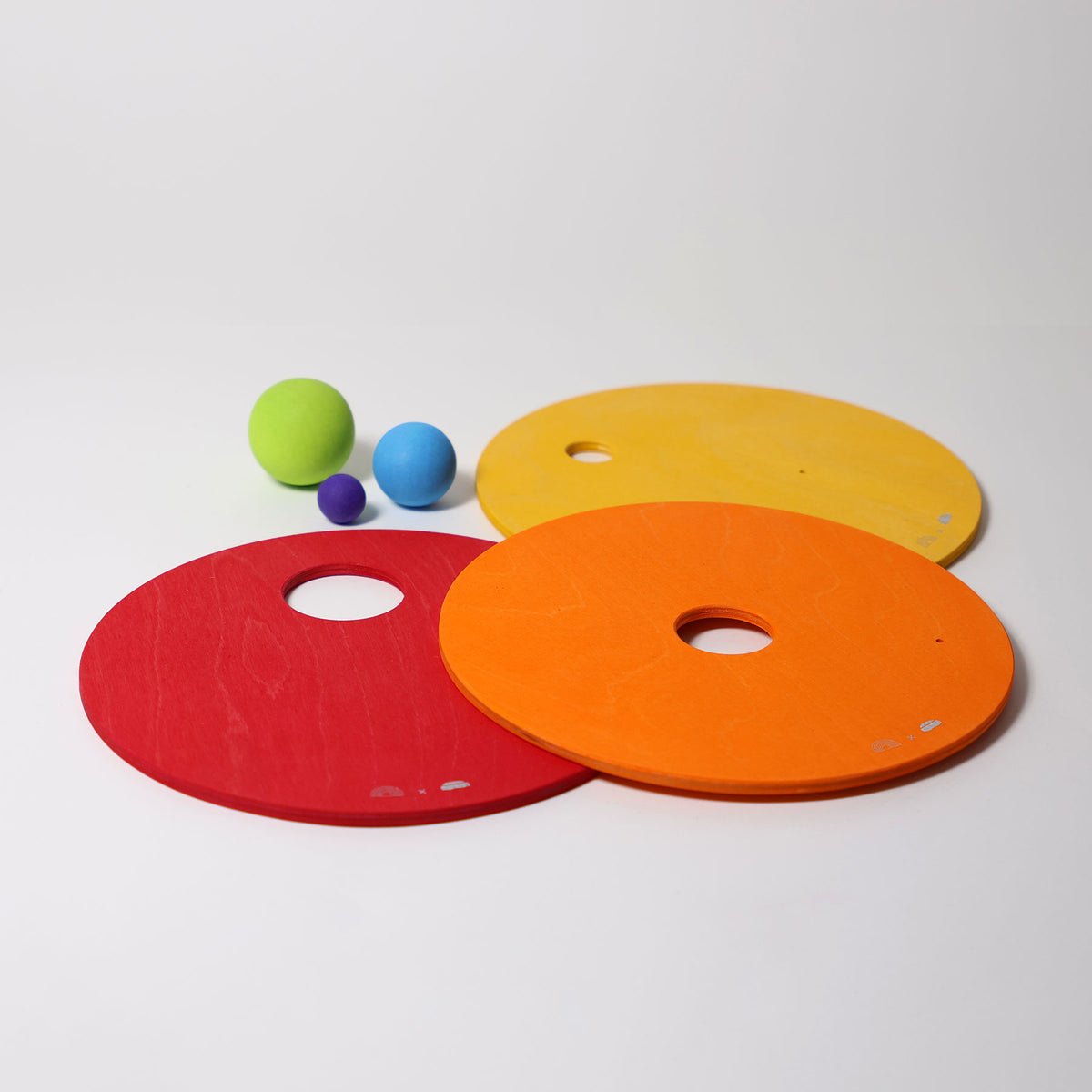
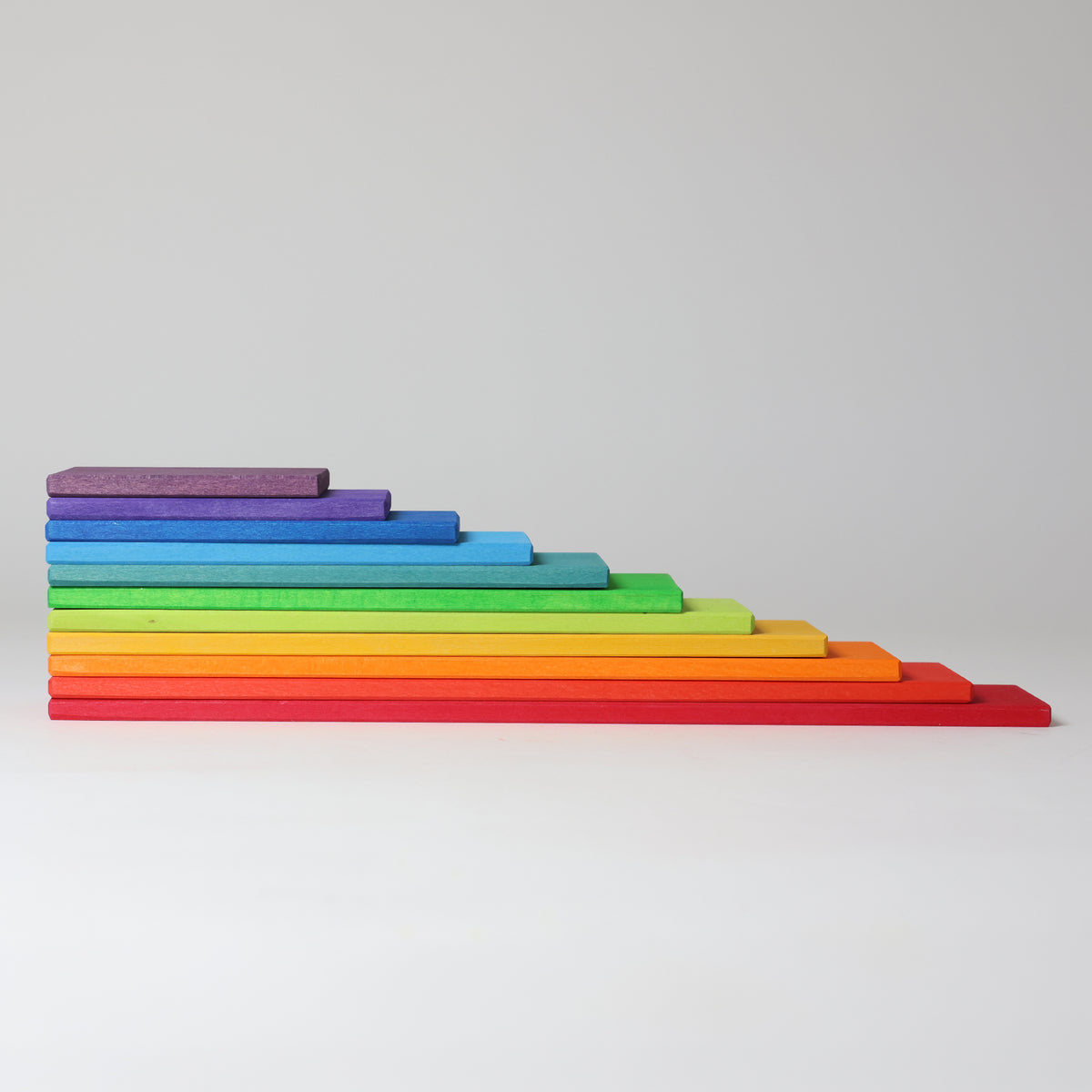
With several rainbow arches, small tunnel paths can be created one after another. Building plates help to incorporate height differences or create new levels.
Even with just a few elements, the first small ball runs can be built, which children can assemble and modify independently.
TIP: Try it yourself and surprise the little ones with their first ball run construction.

The Rainbow Snake
Beautiful spiral tracks can be built with rainbow arches.
The arches are arranged slightly offset so that the marble rolls downwards in a curved motion. Children observe carefully how speed and direction change.
Often, new ideas and extensions emerge quite naturally.
TIP 1:
Always skip an arch when building. So, the first and third arch together, then the second and fourth arch, and so on.
TIP 2:
Build the ball runs on a slightly sloping surface. The gradient allows the ball to roll smoothly.

Ball runs with heights and levels
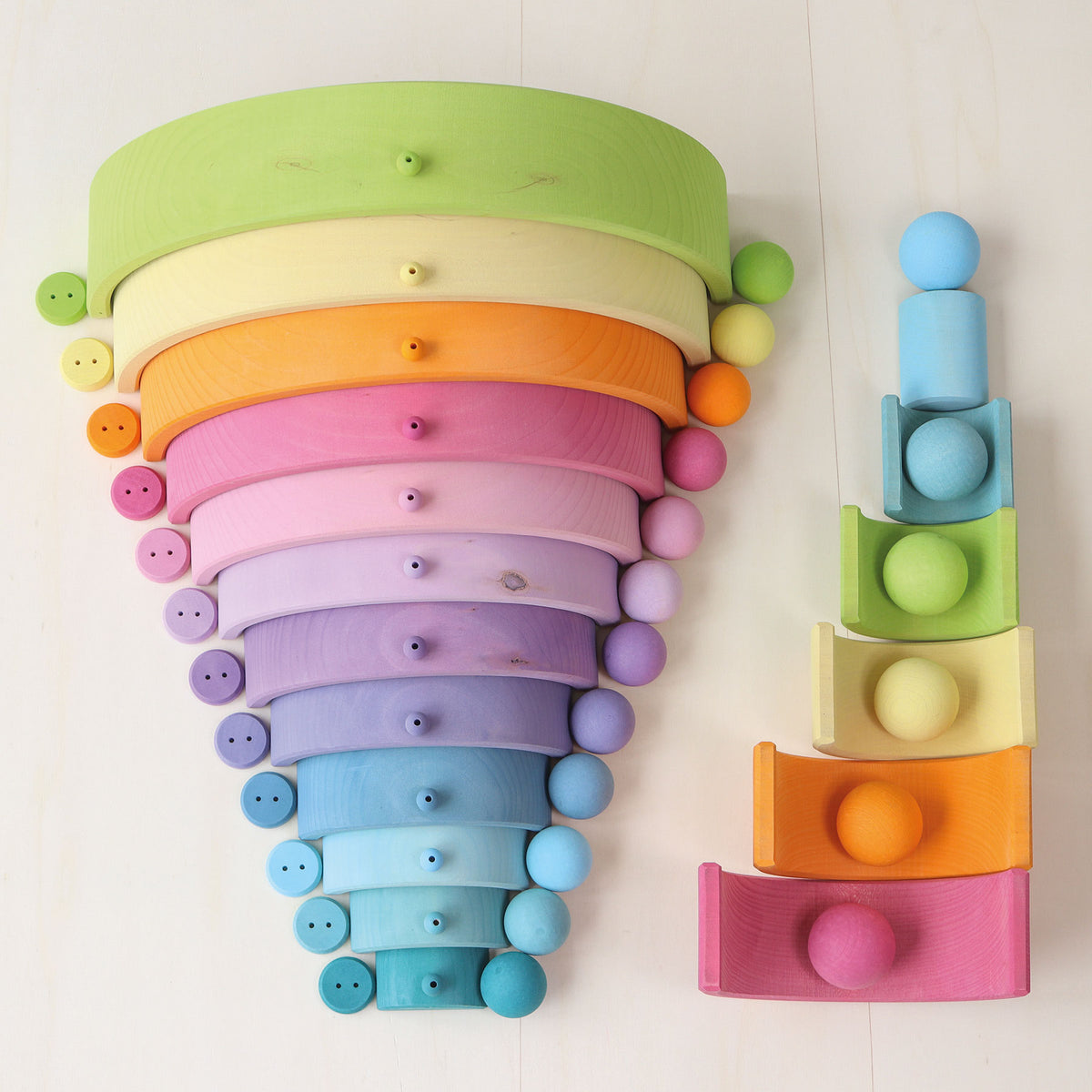
Additional levels and slopes can be built with a Large Stepped Pyramid or Large Stepped Counting Blocks.
The ball starts at the very top and rolls down step by step. Children directly experience height differences.
Building boards are also wonderful for creating longer tracks or small bridges. Combined with rainbow arches, new track layouts are constantly created.
Many children eventually start constructing themselves:
- Which parts fit together?
- How can the ball roll for as long as possible?
In the process, not only is building involved, but also planning, testing, and constant modification.


Marble runs change with age
The beauty of open-ended ball runs is that they can always evolve.
Young children often enjoy short paths and simple tunnels. Older children build more complex constructions with multiple levels, changes of direction, or long connections.
Some supplement their tracks with:
- building boards
- stepped pyramids
- rainbow arches
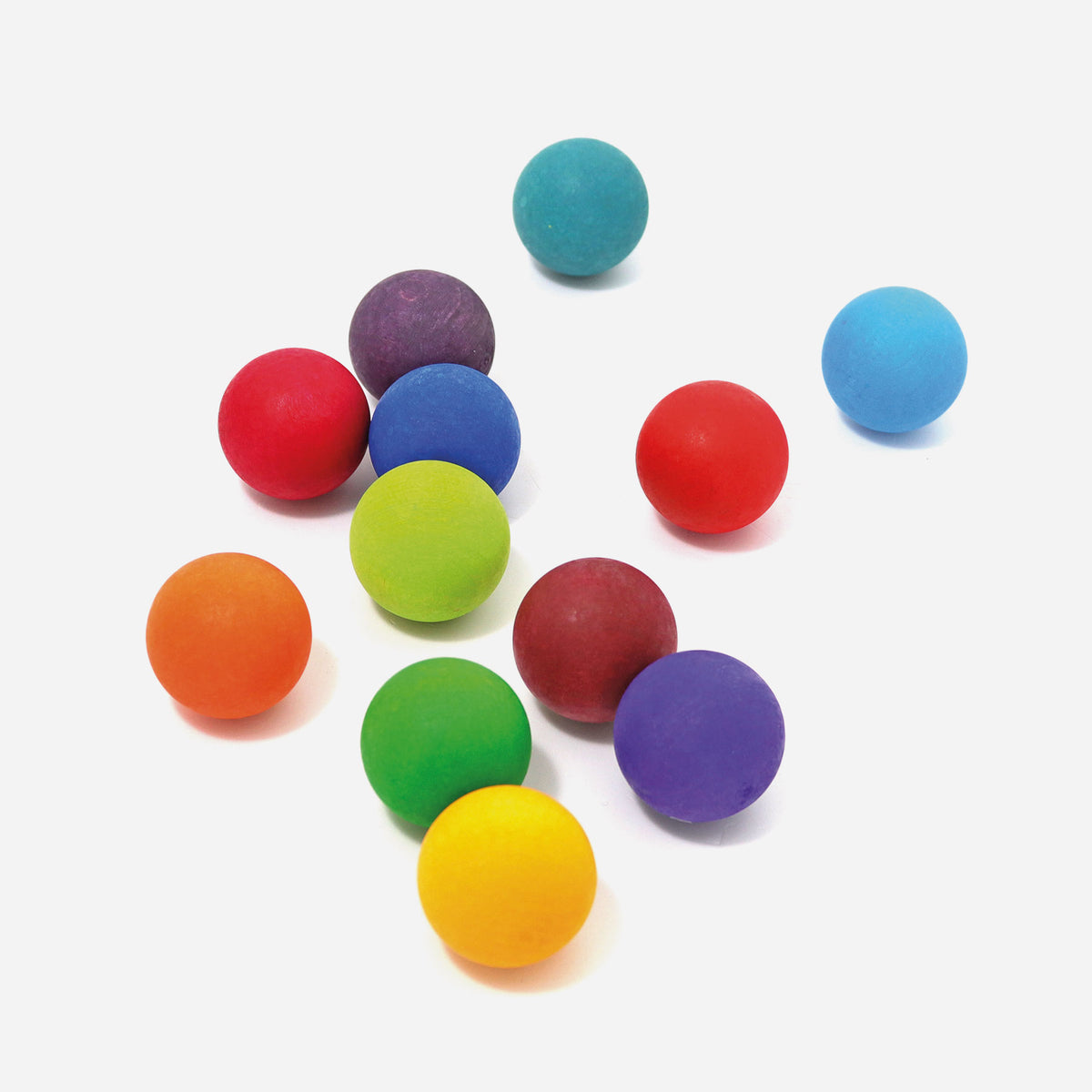
- balls of various sizes
- small figures or fantasy worlds
This creates ever new combinations and challenges.


When experimenting turns into learning
An incredible amount is learned through building ball runs – and it's all playful.
Children observe movements, develop solutions, test ideas, and directly experience what works and what doesn't. A track can collapse, be changed, or rebuilt entirely.
And that's often where the greatest magic lies:
That new ideas can always emerge from simple wooden parts, a little patience, and a rolling marble.